 Rated Excellent on Trustpilot


Last week saw a sharp drop in the gold price, followed by a big recovery on Friday, as markets reacted to employment data from the US.
Wednesday’s interest rate decision, and reduced expectations for a September rate cut had seen the US dollar rally, and gold drop as low as $3,269 per ounce. The Federal Reserve seemed to be leaning hawkishly, stating that no decision had been made on September’s rate decision, while job figures and GDP growth in recent months had looked solid. Combined with higher inflation expectations from tariffs, and there was plenty of justification for the Fed to hold on rates next month.
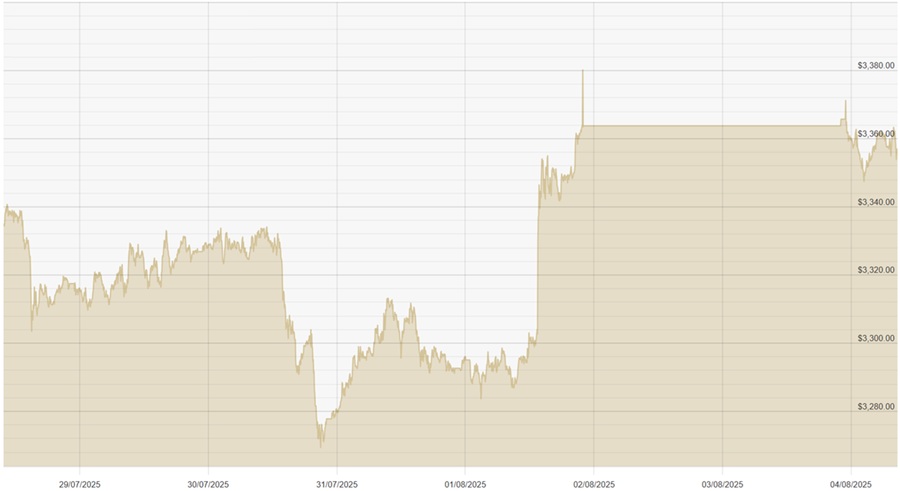
Friday however brought a dramatic twist, with the latest nonfarm payrolls data. July saw 73,000 jobs created, below expectations, but it was revisions to May and June’s figures that caused markets to react. May’s numbers were revised down to 19,000 and June to 14,000, wiping a combined 258,000 jobs off the previous estimates.
Job figures being revised down is quite common, and doesn’t typically see much reaction, but the massive drop to May and June raises fears that the US economy is in worse shape than previously believed, and that the initial months of the trade war has had a greater impact.
Rate cut expectations for September have shot back up, with the CME FedWatch tool showing a 79.5% chance for a cut in September and 95.3% at October’s meeting. After steadily climbing from Wednesday, the US dollar index also ended the week flat.
Gold jumped quickly after the job report was released, and ended the week at $3,363, the highest weekend close in just over a month. In GBP, gold is solidly above £2,500, having closed the week at £2,533. In euros, the weekend close saw gold at €2,903.
It has been a relatively quiet open to trading for the week, and markets haven't reacted to the potential escalation between the US and Russia after President Trump claimed to have sent two nuclear submarines to strategic locations in response to Russian comments. So far, there has been no response from Russia, which seems to have convinced markets that the situation won’t deteriorate further, but geopolitics remains a potential driver for gold in the weeks and months ahead.
After the rollercoaster of last week, markets will be closely watching US data releases this week for any further signs of the economy weakening. The US tariffs revealed last week will also come into force on Thursday (August 7th), providing another shock to the economy. If a September rate cut is considered even more likely, the US dollar could start to weaken further, and gold could be propelled higher once more.