 Rated Excellent on Trustpilot


Rate Hikes Loom Over Gold
Gold is usually expected to perform well when global tensions rise. Recently, however, the market has been rather less obliging.
As we have covered extensively in our blogs, the ongoing conflict involving Iran has created an unusual set of pressures for precious metals. The closure of the Strait of Hormuz has pushed oil prices higher, adding fresh inflationary pressure across global markets. At the same time, stronger energy prices have supported the US dollar, while expectations for interest rate cuts have been quietly shown the door. That combination has proved difficult for gold.
A stronger dollar, rising real yields and the prospect of higher-for-longer interest rates all tend to weigh on non-yielding assets. In simpler terms, when investors can earn more from cash or government bonds, gold has to work harder for attention. Even in a crisis. That helps explain why gold has struggled since its initial spike at the start of the conflict.
What has tended to happen over the last couple of months, is any pull back in the oil price has seen a rally in precious metals. However, this week, softer oil prices offered little relief. Brent crude slipped 0.2% to $91.28 a barrel, but gold failed to respond in kind. Instead, the price continued to fall, reaching $4,155 at the time of writing on Wednesday, comfortably below the levels seen at the start of 2026.
So why has gold not found firmer footing?
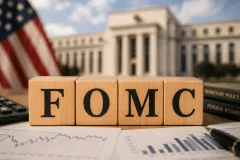
Once again, all roads lead to the US Federal Reserve. Stronger-than-expected US jobs data at the end of last week showed 310,000 nonfarm payrolls added, pushing the 10-year US Treasury yield to 4.85%. That added further pressure to gold and helped extend the recent sell-off. But significant attention now turns to US inflation data released Wednesday, which showed inflation rising to a three-year high of 4.2%. That figure has landed a week before the next Federal Open Market Committee meeting on Wednesday 17th, where markets will be looking for clearer signals on the path for interest rates.
Current market expectations suggest a 75% chance of a rate hike, which is a far cry from the rate cut(s) which was expected at the turn of the year. Between now and the Fed meeting, further pressure on gold would not be surprising as markets react to the data and try to anticipate future policy movements. Some investors may continue to reduce exposure to gold-backed exchange-traded funds, particularly as higher-yielding assets become more attractive in the short term.
Does this change the longer-term outlook?
As ever, certainty is in short supply. The conflict involving Iran, the strength of the US dollar, inflation and central bank policy are all pulling at the gold market in different directions. Citigroup’s latest forecasts capture the tension neatly. The bank has reduced its short-term gold forecast from $4,300 to $4,000 per ounce, reflecting the difficult near-term conditions. However, its 6–12 month outlook remains unchanged at $4,500. Deutsche Bank’s more optimistic longer-term forecast of $8,000 also remains in place.
In other words, the short-term picture has become more difficult, but the longer-term case has not disappeared. Gold is currently facing a rather awkward mix of headwinds: stronger yields, a firmer dollar, stubborn inflation and interest rate uncertainty. Yet many of the reasons investors hold gold- diversification, long-term value preservation and protection against wider uncertainty, remain relevant.
The next week may prove important. Investors will be weighing whether the recent weakness represents an opportunity, or whether it is better to wait for the dust to settle after the Fed meeting. The difficulty, as ever, is that markets rarely ring a bell at the bottom.
Gold may be under pressure for now, but the bigger story is still being written.