 Rated Excellent on Trustpilot


Gold and silver have entered a new consolidation phase after pulling back from recent record highs. Given the significant pace at which gains had been made, analysts have called the pullback healthy, and believe 2026 will see further records.
After hitting an all-time spot price high of $4,381.98 per ounce, gold has retreated to trade in a range of around $3,975 - $4,025. It has struggled to hold above $4,000, but any dips toward $3,900 have also been bought into, and gold remains up more than 50% so far in 2025.
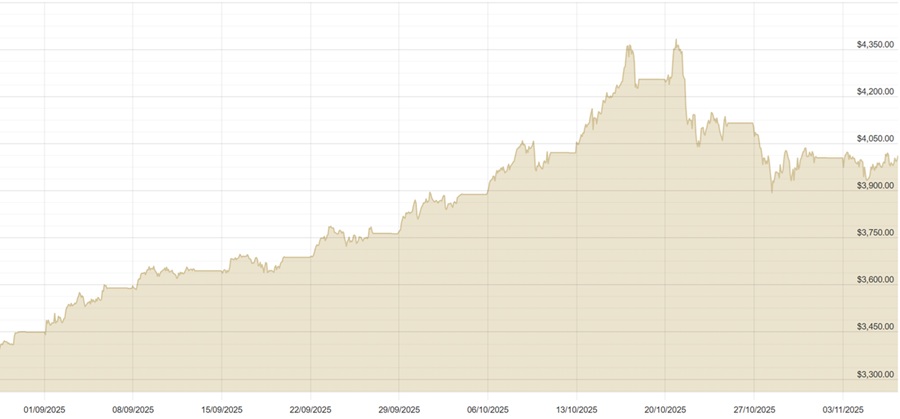
Silver’s chart also looks remarkably similar to gold at present, with a spike to $55.51, followed by a retreat to trade around $48. While this level signalled a sharp drop in 2011, silver is holding on to the gains so far, and consolidation at this level would be very bullish for silver’s outlook.
Stock markets have looked shaky this week, with the NASDAQ down 3.55% in the past five days and the Dow Jones down 1.5%. Concerns over the AI sector in particular have re-emerged, with figures like Jamie Dimon and the Bank of England warning of a sharp correction should the bubble burst.
The growth in stock prices for AI companies like NVidia has been significant in recent years, but warnings are rising. A cycle of investment announcements between companies like Nvidia, AMD, Microsoft, Open AI and others, suggests an overvaluation in these companies, and if the bubble bursts it could cause a major crash similar to the dot-com bubble or the Great Financial Crisis.
Should stocks crash, gold and silver could be vulnerable to an initial sell-off given their liquidity and current profit levels, as has been seen in prior stock market crashes. After an initial drop however, funds would likely flow back in and push prices higher. Silver could be more vulnerable to the AI bubble bursting, with it’s reliance on industrial demand impacted by any potential reduction in the need for data centres.
For gold however, the fundamentals driving the price remain strong. The Fed are likely to continue cutting rates, and while the meeting on December 10th is currently given a 66% chance of a cut according to the CME FedWatch tool, by March this rises to an 87% chance. Central bank and investor demand remains high, while geopolitical and trade uncertainty also continues to boost demand.
The consolidation period seen this summer lasted around five months, and gave gold and silver the platforms to launch to their new records. Volatility from a stock correction could impact precious metals in the short-term, but would still prove beneficial in the long-run for safe havens.