 Rated Excellent on Trustpilot


Pressure building beneath the surface
Gold continues to feel the strain. Early this week, prices have come under further pressure, extending the trend seen over the past month. A continual stronger US dollar and now, rising Treasury yields, have combined to weigh on the metal, pushing it into what many would now describe as bear market territory.
The central issue remains the conflict in Iran. Pakistan continues to attempt to mediate but with little success so far after Trump dismisses Iran's latest proposal. And with no clear resolution in sight, oil prices have stayed elevated, now comfortably above $105 per barrel. So, as the Strait of Hormuz, a critical route for global energy supply, is still disrupted, the knock-on effects are being felt well beyond the region.
Higher energy prices are feeding into global inflation expectations, and in turn, shaping monetary policy which has an impact on the gold price.
Rates on hold, but not at rest
This week brings a cluster of central bank decisions - the Federal Reserve, Bank of England, ECB, Bank of Canada and Bank of Japan all meeting within days of each other. The expectation is broadly the same, that rates will remain unchanged, but all eyes will be on any clue as to sentiment and future decisions.
Central banks are increasingly in “wait and see” mode, watching how the energy shock feeds through to inflation and growth. And while rates may be on hold, the direction of travel still matters. Japan offered a useful insight at the start of this week. While the Bank of Japan held rates steady as expected, three policymakers surprisingly called for a hike - a signal that inflation pressures are beginning to shift the conversation. If that stance develops more broadly, it introduces further competition for gold in the form of yielding assets.
A changing guard in the US
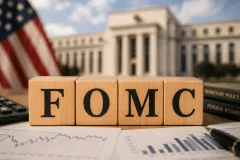
Overlaying all of this is a shift at the Federal Reserve. This week’s FOMC meeting is expected to be Jerome Powell’s last as Chair with attention now turning to Kevin Warsh, whose appointment appears increasingly likely.
Warsh is widely seen as hawkish. Even without immediate policy changes, that perception alone can influence market expectations, particularly around how long interest rates may remain elevated. And as recent weeks have shown, that matters for gold.
A familiar tension
There’s a clear dynamic at play.
Gold typically benefits from inflation and uncertainty - both of which are present. But higher interest rates, and the strength in the dollar that is currently coming from this situation, are acting as a counterweight.
It’s not that gold has lost its appeal, it’s that it’s competing more directly with yielding alternatives. That means for now, the market is being dictated by events in the Middle East. If energy prices remain elevated, central banks are likely to stay cautious, and rates may remain higher for longer, which keeps pressure on gold in the short term.
But if and when conditions begin to ease, whether through a resolution in Iran or a reopening of the Strait of Hormuz, the picture changes quickly. Lower energy prices would soften inflation expectations, potentially reopening the door to rate cuts. And with that, a more supportive environment for gold.
This therefore presents a decision as old as time - with prices dipped, does this present an opportunity to buy ahead of future potential rallies - or is it best to hold off a little longer and risk missing the bottoming out of the price?