 Rated Excellent on Trustpilot


A Brutal Pullback, But Not the Full Story
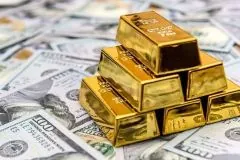
For a market that spent much of the past year climbing steadily higher, the last couple of weeks have felt different. Gold opened Monday with a sharp drop, falling toward $4,100/oz, its steepest weekly decline in over 40 years. Whilst prices have since stabilised, gold remains roughly 20% below the record highs seen in January, with silver following suit.
That’s enough to prompt the inevitable question: are we drifting into bear territory?
Is Gold Caught in the Crossfire?
What’s notable about this sell-off is that it hasn’t been driven by a collapse in demand or a sudden shift in long-term fundamentals. Instead, gold has been caught up in something broader.
Across markets liquidity has tightened, with large funds even restricting withdrawals, forcing investors to meet obligations and margin calls elsewhere. When that happens, liquid assets tend to be first in line, and gold, for all its safe-haven credentials, is one of the most liquid assets there is. As one strategist put it, this has the feel of a “sell everything” moment, with it being less about gold itself and more about the wider system under pressure.
A perfect storm
At the same time, the macro backdrop hasn’t been doing precious metals any favours. With rising oil prices driven by the conflict in the Middle East and resulting in the closure of the Strait of Hormuz, we are seeing global inflation concerns being fuelled. That, in turn, is pushing bond yields higher and strengthening the US dollar, which is where things become awkward for gold.
- A stronger dollar makes gold more expensive for overseas buyers
- Higher yields make non-yielding assets less attractive
- Persistent inflation reduces the likelihood of rate cuts
Markets are now increasingly pricing in no interest rate cuts in 2026, with even a single cut looking less certain than it did just weeks ago. For gold, that’s a combination that tends to cap upside in the short term.
We're currently in the midst of a paradox of war and inflation, with geopolitical tension normally a key driver in the gold price. However, in this case, it’s also driving higher energy prices, which in turn is reinforcing inflation and with it, higher rates and a stronger dollar. It’s a reminder that markets rarely move in straight lines and that the same event can push prices in opposing directions at the same time.
The Takeaway
There’s a case to be made that this is simply a reset after an exceptional run. It’s easy to forget that gold started 2025 around $2,600/oz and entered 2026 above $4,300/oz, a move of more than 60% in a relatively short space of time. By any standard, that’s a significant rally for an asset typically described as “steady”. Seen through that lens, a pullback, even a sharp one like we have seen this past week, is not entirely unexpected.
But what we’ve seen this week isn’t necessarily a verdict on gold, it’s a reflection of how interconnected markets have become. Gold hasn’t been sold because it’s broken, but rather because it’s liquid. For now, the market appears to be adjusting, unwinding leverage, reassessing rates, and recalibrating expectations.
Whether this proves to be a pause, a reset, or something more prolonged will depend on what happens next with inflation, interest rates and energy markets. As ever with precious metals, the short term can be messy, but its important to keep a calm head with an asset that has always proved its worth long term.