 Rated Excellent on Trustpilot


Lunar Pause, Dollar Push: What’s Moving Gold and Silver Now
After January’s fireworks, February has brought something different: pressure.
April gold futures recently slipped to their lowest intraday levels since early February, while silver has continued to digest one of the sharpest corrections in decades. The timing is no coincidence. Much of Asia, and crucially China, has been closed for the Lunar New Year, removing a key source of physical demand and liquidity from the market.
Gold: Softer, But Structurally Sound
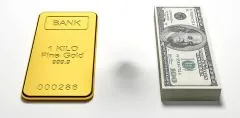
Gold is currently hovering around $4,950 per ounce, roughly 12% below its recent peak. The sell-off has coincided with a stabilising U.S. dollar, which raises the opportunity cost for overseas buyers and often caps near-term upside.
But it’s important to separate short-term positioning from long-term structure. Central bank buying remains firm. De-dollarisation trends haven’t reversed. Sovereign debt concerns haven’t disappeared. And physical demand, particularly across the UK, Europe and parts of Asia, have been described by dealers as “off-the-scale.”
Even in India, premiums remain near decade highs despite elevated prices. Chinese demand has softened seasonally, but broader Asian offtake remains resilient. The institutional conviction behind gold hasn’t evaporated, it’s simply being temporarily overshadowed by thinner liquidity and speculative repositioning.
In other words: this looks like digestion, not deterioration.
Silver: The correction
Silver has felt the correction more acutely.
After a spectacular ~60% January rally that took it toward $122/oz, prices have retraced sharply, trading recently around $76. That leaves silver roughly 38% below its January high.
Much of the surge was speculative. Heavy positioning, elevated margin requirements and stop-loss cascades all contributed to a swift unwind. When silver runs hard, it tends to correct hard.
That said, the longer-term fundamentals remain constructive. The Silver Institute forecasts a sixth consecutive annual structural deficit in 2026, around 67 million ounces. Supply is rising, including scrap recycling at decade highs, but still struggles to fully meet the combination of investment demand and industrial use, particularly from solar expansion.
In the short term, however, silver may require consolidation. Technically, recent rebounds have produced lower highs, a sign that conviction is rebuilding slowly rather than explosively.
The Dollar, The Fed and What’s Next
Currency dynamics remain central.
A broadly firmer U.S. dollar in thin trading conditions has added on precious metals. At the same time, strong U.S. jobs data has pushed rate-cut expectations toward summer rather than spring, reducing the urgency behind the “lower rates = higher gold” narrative.
Markets now await the Federal Reserve’s January meeting minutes and the upcoming Personal Consumption Expenditures (PCE) inflation data. Comments from Fed officials remain mixed: some see scope for further cuts if inflation cools; others caution patience.
Until that path becomes clearer, metals may trade more on positioning and sentiment than fundamentals.
The Takeaway
The latest price action is less about a broken bull market and more about a market adjusting to thinner liquidity, a firmer dollar and recalibrated rate expectations.
Gold’s relative resilience suggests institutional support remains strong. Silver’s sharper drawdown reflects the unwinding of leverage rather than the collapse of its structural story. As always with precious metals, volatility grabs attention. Fundamentals decide the longer-term outcome.
For now, the market appears to be pausing, not reversing, as it waits for its next catalyst.