 Rated Excellent on Trustpilot


The storm before the bigger storm
A week ago, we wrote about how a ceasefire shifted the mood in precious metals. We saw prices respond quickly, with gold spiking as markets reacted to the prospect of calm in the Middle East. But as is typical with current affairs in recent years, the initial optimism has given way to uncertainty, as signs of strain are already appearing in the ceasefire. This has seen gold spend much of the week holding around the $3,700 mark - less a loss of direction and more a market waiting for the next move.
A week ago, we wrote about how a ceasefire shifted the mood in precious metals. We saw prices respond quickly, with gold spiking as markets reacted to the prospect of calm in the Middle East. But as is typical with current affairs in recent years, the initial optimism has given way to uncertainty, as signs of strain are already appearing in the ceasefire. This has seen gold spend much of the week holding around the $3,700 mark - less a loss of direction and more a market waiting for the next move.
Waiting, not weakening
It’s tempting to try and call what happens next, but as last week has proven, its probably best to just focus on the fundamentals behind gold’s rise over the past 12 months - which haven’t changed. So, with that in mind, attention should focus on US economic policy as an indicator of golds next move. The dollar has softened this week, helped in part, by easing oil prices as talks of a conflict resolution continue, and some tankers passing through the Straight of Hormuz, despite the US blockade. A weaker dollar tends to support gold, making it more accessible globally.
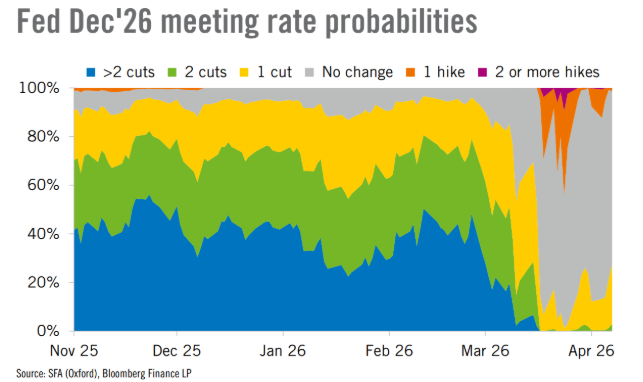
Linked to all of this, expectations around interest rates are slowly shifting again. Markets are now assigning a higher probability to a rate cut later this year, with the likelihood sitting at around 27% Vs 14% last week (as a reminder, 2 rate cuts were predicted at the start of the year in the midst of Golds record highs). Gold doesn’t pay interest, so when rate expectations fall, it tends to look more attractive by comparison.
A delicate balance
The Federal Reserve, however, isn’t making this easy. Inflation remains persistent, while the jobs market shows signs of slowing beneath the surface. Strong headline figures mask a pattern of downward revisions and stagnation in overall employment growth. In short, the Fed is balancing two competing pressures, on one hand, controlling inflation and on the other, supporting growth.
If inflation stays elevated, interest rates may remain higher for longer. But if growth weakens, cuts may follow. This uncertainty, played out through the prism of the Middle East conflict, is why we're seeing the gold price hovering rather than a sustained dip or increase.
What comes next
If tensions ease further, inflation driven by energy / oil pricing may soften slightly. That could open the door to lower interest rates, and we could therefore see a more supportive environment for gold.
If they don’t, uncertainty remains, which could mean gold stays within its current range for a little while longer.
Either way, the current moment feels less like an end point, and more like a holding pattern.
Either way, the current moment feels less like an end point, and more like a holding pattern.