Rated Excellent on Trustpilot


A Week in Gold's Shoes
A fortnight ago, the US midterms put gold back above $4,000 and things were looking up. On Monday 9th November, talk of fresh US-Iran diplomacy pulled oil lower and lifted gold above $4,100.
It didn't last. Within days, hopes of a peace deal had faded and gold was back below $4,000. On Wednesday this week it slipped under $3,800, and by the evening it was close to $3,700, its lowest level since September last year.
Gold has had better weeks. So what happened, and should you be losing sleep over it?
Inflation had its say
On Tuesday 10th November, US inflation for October came in hotter than expected. That same day, Fed Governor Christopher Waller said he backs a rate rise in December, and might even consider a larger one. By the end of the week, markets saw a December rise as close to certain.
As we've covered before, gold doesn't take kindly to rising rates. It pays no interest. So when cash and bonds pay more, the income you give up to hold gold goes up too. US government bond yields climbed towards 5%, and some investors decided they'd rather be paid to wait.
Then came the minutes
On Wednesday evening, the Fed published the minutes of its October meeting. They read like a warning. Nearly all policymakers expected to raise rates in December, two floated the idea of a larger rise, and most worried that inflation could stay high for some time. Gold fell more than 3% in a single session.
The dollar had a better week
The minutes sent the dollar to its strongest level in around 19 months. A strong dollar makes gold more expensive for anyone buying in pounds, euros or rupees, and that tends to cool demand.
The link has been unusually tight this year. Analysts at Heraeus found that, in 2026, a 1% rise in the dollar has typically come with a fall of a little over 2% in gold. Over the long run, the dollar explains far less. Gold is worth almost ten times what it was in 1990, while the dollar has barely moved. Over years rather than days, what matters more is the real interest rate: the return on government bonds once inflation is taken off. That has climbed close to its highest level since 2008, and it's no coincidence that gold has struggled.
There is one detail worth keeping an eye on. Speculators are now betting on the dollar more heavily than at any time since 2016. Heraeus notes that extremes like this have often come before the dollar weakens, though it's careful to add that they're a poor guide to timing.
Worth noting: oil has fallen sharply this month, which would usually help gold, as cheaper energy eases inflation. This time it hasn't. Right now, rates and the dollar are calling the shots, not the Middle East.
Then there was the stock market. Shares in AI companies sold off again after Nvidia's founder stepped down as chief executive amid a scandal. When shares fall hard, some investors sell whatever they can to cover losses elsewhere. Gold is often first in line. Not because anything is wrong with it, but because it's easy to sell.
Even good news didn't help much. On Tuesday evening, Nvidia reported another bumper quarter and a stronger outlook than expected. Its shares rose at first, then gave the gains back overnight. Some read that as a sign of a market that has simply run out of energy, at least for now.
Silver has had it worse
If gold has had a bad week, silver has had a worse one. It dropped 5% on Wednesday alone, falling below $45 an ounce, and has lost around twice as much as gold so far this month.
Silver wears two hats. It's a store of value like gold, but it's also an industrial metal, used in everything from solar panels to electronics. When interest rates rise and the outlook for industry dims, it can be squeezed from both sides. Demand from solar panel makers has cooled, and speculators have stepped back.
The longer-term picture is less gloomy. The Silver Institute says the market's fundamentals remain strong despite the sharp drop in price, and Bank of America expects a recovery next year. Silver has always been the more excitable of the two metals, in both directions.
Closer to home
Here in the UK, inflation rose to 3.6% in October, its highest level in a year, pushed up by petrol and diesel. The Bank of England raised rates earlier this month for the first time in three years, and another rise in December can't be ruled out.
The Bank itself expects inflation to approach 5% by the middle of next year. For savers, that's a reminder of what rising prices quietly do to cash in the bank. A higher interest rate helps, but only if it keeps pace. It's the same question gold has been answering for a very long time.
Higher rates on both sides of the Atlantic make for a tough backdrop for a metal that pays nothing. That's the honest version.
Not everyone has given up on gold
Here's the other side. In India, lower prices brought buyers out in force for Dhanteras and Diwali, with spending on gold up by around a fifth on last year. Indian gold funds have now taken in new money for five months running.
The banks haven't given up either. Goldman Sachs expects gold to climb back above its record of around $5,600 by the end of 2028, once the Fed starts cutting rates and Western investors return. It also expects central banks to keep buying at more than three times their pre-2022 pace. Morgan Stanley has named gold its top commodity pick for 2027, and expects it back above $5,000 by the end of next year. Schroders points out that so many traders are now betting against gold that, if the mood turns, the rally into year-end could be a sharp one.
Neither is a promise. Goldman also expects more bumps while the Fed keeps raising rates. But it's a reminder that those who think in years, rather than weeks, haven't changed their minds.
We've seen this film before
Goldman made one comparison that's worth dwelling on. In its words, "2027 increasingly looks like 2022".
In 2022, the Fed raised rates faster than it had in decades to get on top of inflation. The dollar soared, and gold fell by around a fifth between the spring and the autumn. At the time, plenty of commentators wondered whether gold's best days were behind it.
They weren't. Once markets began to sense that rate rises were nearing an end, gold recovered. Within about a year of its low, it was setting new records. Central banks, which had kept buying throughout, were a big part of the reason.
History never repeats itself exactly, and past performance is no guide to the future. The Fed may yet go further than markets expect. But the pattern is a familiar one: rate rises tend to weigh on gold while they're happening, and matter much less once they stop.
Where gold stands
In January, gold set a record of $5,595. Today it sits around a third below that. It's been an uncomfortable autumn.
In the short term, the headwinds are clear: rising rates, high bond yields and a strong dollar. Over the longer term, the tailwinds haven't gone anywhere. Governments are still borrowing heavily, and central banks are still buying.
America also faces another fight over its debt ceiling next year, the legal limit on how much its government can borrow. With Democrats taking control of Congress in January, that fight could be a long one. Stand-offs like that have a habit of reminding investors why they might want to own something that sits outside the system altogether.
The price has changed. The reasons people hold gold haven't.
A word about Black Friday
If you've been waiting for gold to get a little cheaper, the market has done some of the work this month. We've done the rest.
Our Black Friday sale has offers on selected gold and silver, from sovereigns to CGT-free coins, with Black Friday itself on Friday 27th November. Each offer is limited by stock, so once a product's Black Friday allocation sells out, its offer ends. For those inclined, it's worth a look.
The weeks ahead
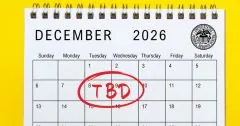
8th to 9th December: the Fed's next interest rate decision, with a rise now all but priced in.
Between now and then, every piece of US data will be read for clues on whether the Fed goes further. Anything softer could give gold some room to recover. Anything stronger would keep the pressure on.
Gold is down, then. But it isn't out. It's been here before, and it's the same metal at $3,700 as it was at $5,595.