
Platinum Group Metals
Platinum group metals, or PGMs, is a name for collection of six elements. The platinum group metals consist of six noble metals - meaning they are resistant to corrosion.
The platinum group metals are: iridium, osmium, palladium, platinum, rhodium and ruthenium. All metals in the platinum group are 'silvery' coloured, but osmium has a slight blue tint. In chemistry, the other generally accepted noble metals (not in the platinum group) are gold and silver.
The six platinum group metals share many characteristics and are usually discovered together in the Earth's crust amongst nickel sulfide or copper minerals. The majority of the group are currently produced from copper and nickel deposits. The largest new deposits are now being mined in Siberia, Russia, and Bushveld, South Africa.
After mining, all the platinum group metals require costly and complex extraction processing. This involves smelting, followed by hydrometallurgical refining. Because of these costly processes and their extreme geological rarity, up to a quarter of platinum group metals in use are obtained from recycling rather than mining.
Platinum Group Metals Uses
As noble metals, all the platinum group are corrosion-resistant and therefore used in medical applications. Iridium has the highest resistance. All are excellent electrical conductors and used extensively in electronics. Osmium has the highest conductivity and is often alloyed with other metals in digital equipment.
The largest use of platinum group metals is as catalysts. They are used extensively in chemical processing and fuel cells. By far the largest consumer is the automotive industry, for catalytic converters.
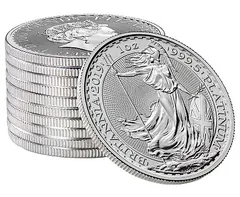
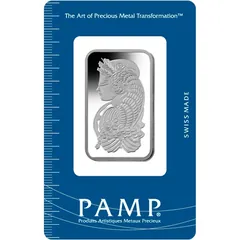
All the platinum group metals are traded on the commodities markets. Platinum and palladium bars and coins are readily available and offer investors an alternative to gold and silver bullion. The options are more limited but they can add further diversity to precious metal investment.
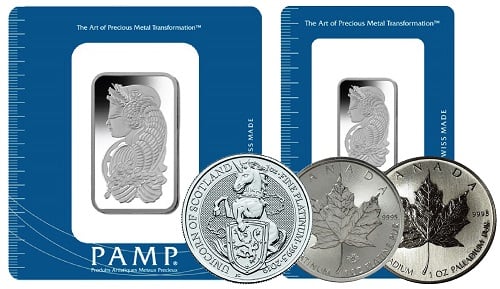
As with gold and silver bullion, platinum and palladium bars and coins are a safe haven investment. The physical metals are free of counterparty risk from actions by governments and banks. For UK tax purposes they are treated very much like silver bullion. That means unlike gold bars they are subject to VAT, whilst legal tender coins remain exempt from Capital Gains Tax.
What are Platinum Group Metals?
The platinum group metals are listed below with key information.
Platinum
Chemical symbol: Pt
Named from the Spanish ‘platina’ meaning silver
Platinum has a high melting point. Mostly alloyed with other metals to resist scratching. It is used in
jewellery and in industry because of its catalytic properties.
Palladium
Chemical symbol: Pd
Named after the asteroid Pallas
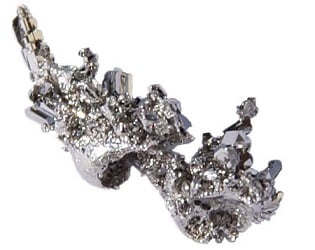
Palladium has a high melting point. Alloyed with other metals it is used in jewellery, in industry as a
catalyst, and in chemical processing to absorb hydrogen.
Rhodium
Chemical symbol: Rh
Named after the rose colour of its salts
Rhodium has a high melting point. It is used in jewellery, in industry as a catalyst,
in glass-making, and for electroplating.
Iridium
Chemical symbol: Ir
Named after Iris, goddess of the rainbow
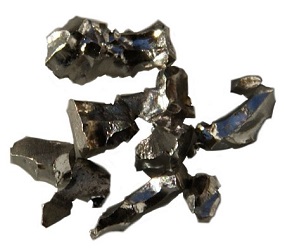
Iridium is the rarest platinum group metal and the most resistant to corrosion. Its extremely
high resistance to oxidation makes it particularly suitable in medical applications.
Ruthenium
Chemical symbol: Ru
Named after the Russian nation
Like others in the group it has a high melting point. It is extremely hard but brittle, with an unusual
hexagonal formation of its atomic structure. Because of the brittle nature it is generally alloyed, and
rarely used in a pure state.
Osmium
Chemical symbol: Os
Named from Greek word for 'odour.'
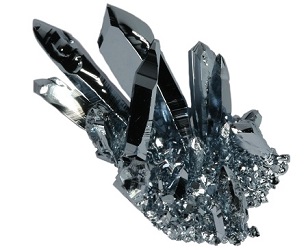
Osmium, with its subtle blue tint, has the highest melting point of the group. It is also the
joint hardest and densest in the group. It is mainly alloyed and rarely used in a pure state.
It is an extremely good conductor and catalyst, and as such is used in fuel cells, and in
forensic science for the detection of fingerprints.
Platinum Group Metal Identification
All of the platinum group metals were known to early civilisations, though true identification would take many more years to achieve. Platinum is present in the Casket of Thebes which dates back to 700 BC. In addition to gold and silver, the cask is decorated with hieroglyphics in an alloy of the platinum group metals. Centuries before the Spanish conquest, the indigenous peoples of South America produced intricate jewellery containing platinum group metals, mixed in with other precious metals.
Despite such artefacts, ancient metal workers lacked the complex refinery techniques required to produce pure platinum group metals. It was not until the late 18th century that pure PGMs began to be refined. The French scientist, P.F. Chabaneau, was first to refine pure platinum in 1789. English chemist William Wollaston discovered palladium in 1802 and rhodium in the following year.
In 1803 another English chemist, Smithson Tennant, identified iridium and osmium. Finally, in 1844, a Russian chemist - Karl Karlovich Klaus - discovered ruthenium, the last metal of the platinum group.
The German refiners Heraeus made their name by inventing a way to superheat furnaces in order to smelt platinum in larger quantities; a move which led to rapid growth of what was a small apothecary in rural Germany, and led to it being one of the most famous international precious metal refiners in the world.
- Home
- How to Buy?
- Payment Options
- Delivery Options
- Gold Storage
- Storage at Brink's
- Gold Investment Guide
- Why buy gold?
- Is gold a good investment?
- Why Physical Gold?
- Best Time to Buy Gold
- Gold Bars vs Coins?
- Gold vs Silver
- Gold - Silver Ratio explained
- VAT on bullion
- Capital Gains Tax & Gold Bullion
- UK Legal Tender Coins
- Top 5 Gold Investments
- Top 5 Silver Investments
- Gold vs ISAs
- Gold vs Buy-to-Let
- Gold vs FTSE 100
- Gold vs Bitcoin
- Where to buy gold?
- Why buy from us?
- Where to sell gold?
- Coin Shops
- Gold Price Forecasts
- Top 10 Gold Producers
- Top 10 Gold Reserves
- Gold Britannia vs Sovereign
- Britannia coin designs
- Sovereign coin designs
- Sovereign Mintages
- Sovereign mint marks
- British coin specs
- What is a proof coin?
- Royal Mint bullion
- The Queen's Beasts
- Bullion Refiners
- British coin mints
- Gold Tola - India & Pakistan
- Bullion Index
- Home
-
- CGT-Free Gold Coins
- 0.5g Gold Coin
- 1oz Gold Coins
- 1/2oz Gold Coins
- 1/4oz Gold Coins
- 1/10oz Gold Coins
- 2026 Gold Coins
- 2025 Gold Coins
-
-
- Charles III Gold Sovereign Coins
- Elizabeth II Fifth Head 2016 - 2022
- Elizabeth II Fourth Head 1998 - 2015
- Elizabeth II Decimal Head 1974 - 1984
- Elizabeth II Young Head 1957-1968
- George V 1911 - 1932
- Edward VII Gold Sovereign Coins 1902 - 1910
- Victoria Old Head 1893 - 1901
- Victoria Jubilee Head 1887 - 1893
- Victoria Young Head Sovereign
- Gold Double Sovereign
- Gold Quintuple Sovereign
-
-
Show More Show Less
-
-
- Half Sovereign Elizabeth II Fifth Head 2016 - 2022
- Half Sovereign Elizabeth II Fourth Head 1998 - 2015
- Half Sovereign Elizabeth II Decimal Head 1980 - 1984
- Half Sovereign George V 1911 - 1926
- Half Sovereign Edward VII 1902-1910
- Half Sovereign Victoria Old Head 1893 - 1901
- Half Sovereign Victoria Jubilee Head 1887 - 1893
- Half Sovereign Victoria Young Head Shield Back 1838 - 1887
- Half Sovereign George IV Bare Head 1826 - 1828
- Half Sovereign George III 1817 - 1820
-
Show More Show Less
-
- Gold Quarter Sovereign
- American Gold Buffalo
- Gold Tudor Beasts
- Royal Mint Gold Myths & Legends
- The Lion and The Eagle Gold Coins
- St George and the Dragon Gold Coins
- Royal Arms Gold Coins
- Six Decades of 007 James Bond Gold Coins
- Gold Queen's Beasts
- Royal Mint Gold Lunar
- Best Value Gold Coins 1oz
-
- Andorran Coins
- Australian Gold Coins
- Austrian Gold Coins
- British Gold Coins
- Bahamas Coins
- Bahrain Coins
- Belgian Gold Coins
- Botswanan Gold Coins
- Burundi Coins
-
Show More Show Less
- Canadian Gold Coins
- Chilean Gold Coins
- Costa Rican Coins
- Cuban Gold Coins
- Cyprus Gold Coins
- Danish Gold Coins
- Dutch Gold Coins
- Fiji Coins
- Gambian Coins
- German Gold Coins
- Hong Kong Gold Coins
- Hungarian Gold Coins
- Indian Coins
- Irish Gold Coins
- Isle of Man Gold Coins
- Israeli Gold Coins
- Italian Gold Coins
- Jamaican Gold Coins
- Jordanian Coins
- Latvian Coins
- Lesotho Gold Coins
- Macau Coins
- Malaysia Coins
- Maltese Gold Coins
- Mauritian Coins
- Mexican Gold Coins
- Nepalese Coins
- New Zealand Gold Coins
- Pakistani Coins
- Persian Gold Coins
- Peruvian Gold Coins
- Rwanda Gold Coins
- Sardinia Gold Coins
- Saudi Arabian Coins
- Scottish Gold Coins
- Singapore Gold Coins
- Somalian Gold Coins
- South African Gold Coins
- Spanish Gold Coins
- St Helena Gold Coins
- Sudanese Coins
- Swedish Kronor
- Swiss Gold Coins
- Tanzanian Coins
- Thai Coins
- Tonga Coins
- Tunisian Coins
- Turkish Gold Coins
- United Arab Emirates Gold Coins
- Uruguay Gold Coins
- Venezuelan Coins
- Colombian Gold Coins
- Isle of Man Angel
- Isle of Man Gold Noble
- Isle of Man Sovereign
- Somalian African Wildlife Gold Coins
- South African Big Five Series
- 22k Gold Coins
- 24k Gold Coins
- Perth Mint Gold Wildlife Coins
-
-
- CGT-Free Silver Coins
- 1oz Silver Coins
- 2026 Silver Coins
- 2025 Silver Coins
- Silver Coin Sets
- 2oz Silver Coins
- 5oz Silver Coins
- 10oz Silver Coins
- Silver Canadian Maple
-
Show More Show Less
- Austrian Silver Philharmonic
- Perth Mint Silver Lunar Series
- American Eagle
- The Lion and The Eagle Silver Coins
- Royal Mint Silver Myths & Legends
- St George and the Dragon Silver Coins
- Silver Krugerrand
- Chinese Panda
- Australian Silver Kangaroo
- Australian Koala
- Australian Quokka
- Australian Silver Kookaburra
- Australian Silver Brumby
- Australian Silver Wedge Tailed Eagle
- Australian Wombat
- Australian Silver Swan
- Australian Emu
- Silver Armenian Noah's Ark
- Silver Trees of Life Rounds
- Silver Tudor Beasts
- Silver Royal Arms
- Six Decades of 007 James Bond Silver Coins
- Egyptian Relic Series
- Star Wars Silver Coins
- Silver Queen's Beasts
- Marvel Series Superhero Coins
- DC Comics Series Superhero Coins
- Isle of Man Silver Angel
- Rwanda African Ounce
- Czech Lion Silver Coins
- Somalian African Wildlife Silver Coins
- Slovakian Eagle Silver Coins
- Australian Mint Silver Coins
- Isle of Man Silver Noble
- Komodo Dragon
- Mexican Libertad
- Dragon Rectangle Coin
- 1 Kilo Silver Coins
- Pre-Owned Silver Coins
- Pre 1947 British Silver Coins (.500)
- Sterling Silver Coins (.925)
- Silver Proof Coins & Sets
-
-
-
- King Charles III Proof Coronation Coins
- King Charles III 75th Birthday Proof Coins
- Queen Elizabeth II Memorial Proof Coins
- Royal Mint Annual Commemorative Sets
- Royal Mint Lunar Proof Coins
- Music Legends Proof Coins
- Winnie the Pooh and Friends Proof Coins
- Royal Mint Harry Potter Proof Coins
- Royal Mint Star Wars Proof Coins
- The Snowman Proof Coins
- Krugerrand Proof Coins
-
- Platinum Proof Coins and Sets
- Royal Mint 1/4oz Proof Coins
- Royal Mint 1oz Gold Proof Coins
- Proof £2 coins
- Proof £5 coins
-
Show More Show Less
-
-
- Charles I Coins
- Charles II Coins
- Edward I Coins
- Edward II Coins
- Edward III Coins
- Edward IV Coins
- Edward the Confessor
- Edward VI Coins
- Edward VII Coins
- Elizabeth I Coins
-
Show More Show Less
- Elizabeth II Coins
- Ethelred the Unready
- George I Coins
- George II Coins
- George III Coins
- George IV Coins
- George V Coins
- George VI Coins
- Harthacnut Coins
- Henry II Coins
- Henry III Coins
- Henry IV Coins
- Henry V Coins
- Henry VI Coins
- Henry VII Coins
- Henry VIII Coins
- James I Coins
- James II Coins
- King Cnut Coins
- King John Coins
- Oliver Cromwell Coins
- Philip and Mary Coins
- Queen Anne Coins
- Queen Victoria Coins
- Richard I Coins
- Richard II Coins
- William and Mary Coins
- William III Coins
- William IV Coins
- William the Conqueror
- Graded Coins
-
-
- Request an Information Pack
- Sign up to our Newsletter